



PREVIEW LEARNING GUIDE


TWM does not provide the movies . . .
    We provide curriculum materials for teachers.


  • Snippet Lesson Plans,

  • Movie Lesson Plans,

  • Movie Learning Guides,

  • Standard questions to use
    with any movie,

  • Standard assignments to
    use with any movie,

  • a Film Study Worksheet,

  • and much more!!


Already a Member? Login Here

GANDHI

SUBJECTS — World/India & South Africa; U.S./Civil Rights;
SOCIAL-EMOTIONAL LEARNING — Rebellion; Peace/Peacemakers;
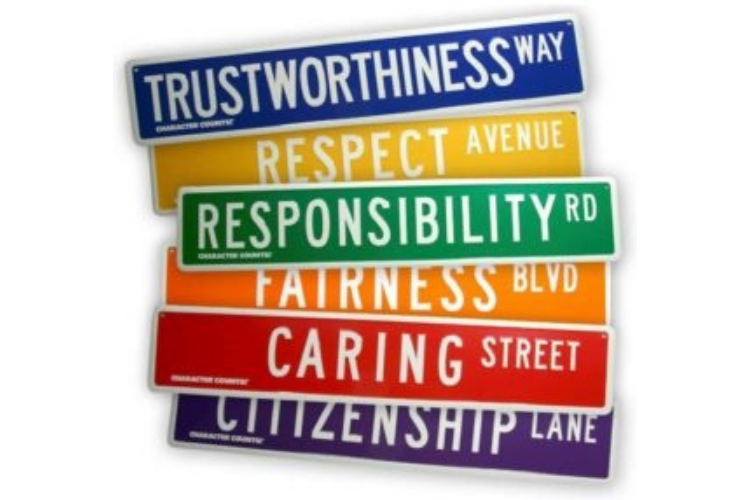
MORAL-ETHICAL EMPHASIS — Trustworthiness; Respect; Responsibility.

Age: 8+; MPAA Rating: PG; Biography; 1982; 188 minutes; Color.

This film is a biography of Mahatma Gandhi, the saint and Indian social reformer.

Gandhi would neither countenance the subjugation of his people nor demean himself by hurting another human being. To reconcile these moral imperatives, he used nonviolent mass action (also called nonviolent civil disobedience) to force governments to change their policies and to achieve independence for India. Nonviolent mass action has been adopted by movements seeking social change or revolution in many parts of the world, including the Civil Rights Movement in the United States and revolutions in the Philippines and Russia. Most recently, it has transformed the Middle East.

Gandhi also campaigned for Hindu/Muslim brotherhood against oppression of the untouchables and for reform in the treatment of women. He is personally responsible for saving hundreds of thousands of lives in India through fasting which stopped communal rioting. His leadership and example have inspired people and many governments, in India and throughout the world, to a new and higher level of morality.

The TeachWithMovies.com Learning Guide to Gandhi will help teachers use this film to introduce Gandhi and nonviolent mass action, the most important new tactic for social and political change developed during the 20th century.


TeachWithMovies.com's Movie Lesson Plans and Learning Guides are used by thousands of teachers to motivate students. They provide background and discussion questions that lead to fascinating classes. Parents can use them to supplement what their children learn in school.

Each film recommended by TeachWithMovies.com contains lessons on life and positive moral messages. Our Guides and Lesson Plans show teachers how to stress these messages and make them meaningful for young audiences.


Each TWM Snippet Lesson Plan Contains:

      • Learner Outcomes/Objectives
      • Rationale
      • Preparation
      • Step-by-Step Instructions
Some snippets simply provide film and Internet resources to supplement lesson plans. Others are complete lesson plans with introductions, handouts, discussion questions, and summative assessments.


Learning Guides Feature the Following Sections:

  • Benefits
  • Possible Problems
  • Helpful Background
  • Building Vocabulary
  • Discussion Questions
  • Links to Internet
  • Bridges to Reading
  • Assignments & Projects
Learning Guides help teachers develop or improve their own lesson plans. Many also feature introductions, handouts, and summative assessments.


$1 per month ($11.99 per year) for
Lesson Plans and Learning Guides to hundreds of films.


SUPPLEMENT SCHOOL CURRICULUM!
PROMOTE SOCIAL-EMOTIONAL LEARNING!

More suggestions about the beneficial use of movies to supplement curricula are added on a regular basis!

Mahatma Gandhi was perhaps the most important ethical/political leader of the 20th century. He lead India to independence at the head of a non-violent movement. This movie will introduce Gandhi and his times.


Learning Guide Excerpt

To demonstrate how our Learning Guides can be used by teachers to improve lesson plans, we have set out below a paragraph from the Learning Guide to Gandhi.

India has many religious groups. The largest are the Hindus and the Muslims. While there were tensions and some hostility between religious groups before colonial rule, the British fanned the flames of religious intolerance and hatred to keep the Indians from uniting to resist colonial rule. The policy was called "Divide and Rule." Gandhi campaigned for religious tolerance. On several occasions he fasted almost to death, to stop sectarian rioting.


The Learning Guide to the film Gandhi contains sections on Benefits of the Movie, Possible Problems, Helpful Background, Discussion Questions, Links to the Internet, and Bridges to Reading. The Discussion Questions are divided into three categories: Subject Matter, Social-Emotional Learning, and Moral-Ethical Emphasis.

A subscription to TeachWithMovies.com will give teachers access to 350 Snippet Lesson Plans, Learning Guides and Movie Lesson Plans. Subscribe Today and introduce children to Mahatma Gandhi, the power of nonviolent mass action, and the struggle for independence in India.


Already a Member? Login Here