




TWM does not provide the movies . . .
We provide curriculum materials for teachers.
- Snippet Lesson Plans,
- Movie Lesson Plans,
- Movie Learning Guides,
- Standard questions to use
with any movie,
- Standard assignments to
use with any movie,
- a Film Study Worksheet,
- and much more!!
|
FINDING NEMO
SUBJECTS — Marine Biology (Science/Technology);
SOCIAL-EMOTIONAL LEARNING — Father/Son; Friendship;
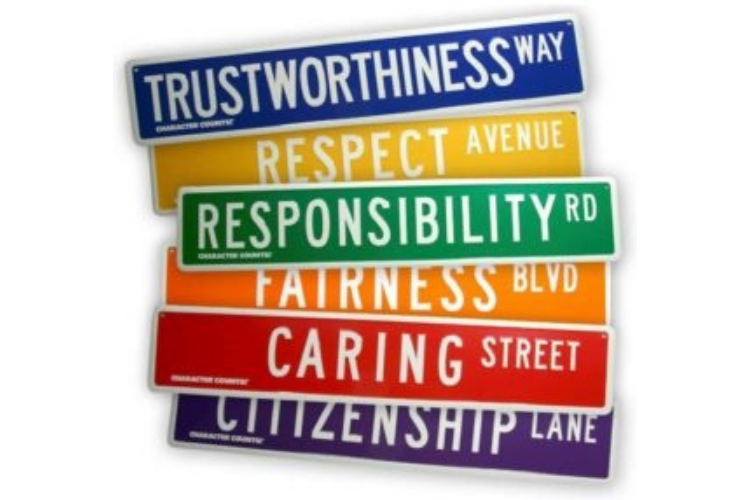
ETHICAL EMPHASIS: — Respect, Responsibility.
Age: 8 - 12; MPAA Rating -- G; Animation; 100 minutes; Color; Available from Amazon.com. For children ages 5 - 8 see Finding Nemo - Talking and Playing for Growth.
This sample is just a taste of the Learning Guide to Finding Nemo. At TeachWithMovies.com, $11.99 per year provides access to 350 Learning Guides and lesson plans covering many topics in the K-12 curriculum. Join TWM and make movies tools for learning!
Learning Guides are flexible tools that allow teachers to easily develop lesson plans. Each Guide also has a special section for parents who want to use movies to supplement curriculum.
Description: Nemo, a young clownfish, strays from the safety of the Great Barrier Reef and is captured by a diver. Placed in a dentist's aquarium in an office with an ocean view, he finds a group of fish with an escape plan. Meanwhile, Nemo's father searches for his son, meeting a number of ocean creatures along the way. Luck and Disney screenwriting lead to a happy reunion.
Benefits: Finding Nemo can be used to jump-start the natural interest that children have in ocean life, coral reefs, and marine biology. It also teaches lessons about friendship, obeying parents, and avoiding dangerous situations.
This Learning Guide provides information about the animals featured in the movie. The Guide can also be used as the basis for a longer discussion of concepts from biology and coral reefs. Discussion questions focus on the animals shown in the film, biological concepts, and the film's lessons for social-emotional learning.
Possible Problems: None.
Parenting Points: For younger children, simply ask, "How did Nemo get into all that trouble?" The answer is not only that he disobeyed his dad, but that he didn't know the dangers of the area he went into and that's why disobeying his father, who was older and more experienced than Nemo, was so dangerous.
Another idea is to go through the types of sea animals which are characters in the film. Show your child a photograph of the real animal (contained in the Helpful Background section to this Learning Guide) and tell them one or two of the interesting things about the animal. Parents can also talk about how coral reefs form and why they are similar to cities.

Anemone fish within the protection of their host
Helpful Background:
Some of the Animals Which Appear in the Movie

Clownfish -- Nemo and Marlin belong to one of about 27 species of clownfish. Their scientific name is amphiprion ocellaris. Clownfish are small and often brightly colored. They belong to the damselfish family. They are 2 - 5 inches (5 - 12.5 cm) long. They live in tropical waters. Clownfish are often sheltered by an anemone with whom they have a symbiotic relationship. In fact, most of the scientific literature refers to them as "anemone fish." Clownfish are not immune to the poison in the anemone's tentacles and at first appear to be stung by them. Scientists believe that by dancing up against the tentacles for a time clownfish develop a protective mucous covering. Clownfish eat leftovers from fish consumed by anemone, planktonic crustaceans, and algae. Clownfish also eat the dead tentacles of their host anemone. Eggs are laid in large batches, usually near and sometimes within the host anemone. For more on symbiotic relationships among animals in the sea see the discussion of symbiosis contained in the full Learning Guide.

Clownfish are not eaten by man but their bright colors make them popular for saltwater aquariums. Divers have damaged many reefs looking for prime specimens. Clownfish live in the tropical parts of the Pacific and Indian Oceans or where warm, tropical waters are carried by currents, such as the east coast of Japan.
Pacific Blue Tang -- Dory's real-life model is paracanthurus hepatus, a members of the surgeonfish family. They were given this name because sharp, moveable spines on both sides of their tails were thought to resemble surgeons' scalpels. These spines are for defense. A fisherman trying to hold a blue tang can suffer a deep and painful wound if the fish tries to escape by giving a twist of its tail. The fish are blue with a yellow tail and a black stripe along the upper portion of their body. They live on zooplankton and can grow to be about 12 inches (31 cm.) long. Pacific blue tangs are found in the central and Indo-Pacific from Africa's East coast to Micronesia.
A different species of surgeonfish, found in the Atlantic Ocean and without a yellow tail, is also called a blue tang. It eats only algae.
Loggerhead Sea Turtles --
Additional information on loggerhead sea turtles can be found on the complete Learning Guide.
Concepts from Biology
The Learning Guide contains information on the food chain, symbiotic and predatory relationships, and other concepts from biology.

A fish with eyespot diversionary markings
Corals and Coral Reefs
Coral reefs are the largest animal-made structures in nature rivaled only by the megalopolises created by man. The most extensive coral reef, the Great Barrier Reef off the coast of Australia, is more than 1,250 miles (2,000 kilometers) long.
See the complete Learning Guide for a section comparing coral reefs to human cities.
Discussion Questions:
These are just a few of the questions set out in the Guide from which teachers can chose. The Guide contains suggested answers to some of the questions.
Anemones and clownfish have what is called a "symbiotic relationship." Tell us what it means using anemones and clownfish as an example.
Some people call clownfish by another name. What is the name and why do they do it?
The blue tang is part of the surgeonfish family of fish. Why are they called surgeonfish?
How big do loggerhead turtles usually grow and how much do they usually weigh?
. . .
CONCEPTS FROM BIOLOGY
When is it said that an animal is at the top of its food chain?
Why are predators often particularly active at dusk?
When is a "diurnal" animal awake?
What is the difference between a diurnal animal and a nocturnal animal?
Describe three symbiotic relationships between animals on a coral reef.
The complete Learning Guide contains more than 40 additional questions relating to concepts from biology, corals and coral reefs, social-emotional learning, and ethics.
Social-Emotional Learning Discussion Questions:
FRIENDSHIP
Were the fish in the aquarium friends of Nemo? Did they go out of their way to help him out?
FATHER/SON
What were the problems in the relationship between Marlin and Nemo?
Moral-Ethical Emphasis Discussion Questions (Character Counts)
TWM's Discussion Questions Relating to Ethical Issues
RESPECT
(Treat others with respect; follow the Golden Rule; Be tolerant of differences; Use good manners, not bad language; Be considerate of the feelings of others; Don't threaten, hit or hurt anyone; Deal peacefully with anger, insults and disagreements)
1. What would have happened in this story if Marlin had not accepted the help of other animals and had tried to rescue Nemo on his own? What does this say to you about people?
RESPONSIBILITY
(Do what you are supposed to do; Persevere: keep on trying!; Always do your best; Use self-control; Be self-disciplined; Think before you act -- consider the consequences; Be accountable for your choices)
2. What did Nemo do wrong that allowed the diver to catch him?
Bridges to Reading: There are a plethora of well-illustrated and well-written children's books about coral reefs. Books can be read aloud to children or advanced readers can read the books themselves. We suggest the following: Coral Reef Animals by Francine Galko, 2003, part of the Animals in their Habitats series; It Could Still Be Coral by Allan Fowler, 1996, part of the Rookie Read About Science series; Fish Wish by Bob Barner, 2000; Coral Reef Hunters by Erica Ethan and Marie Bearanger, 1997, part of the Colors of the Sea series; Old Shell, New Shell by Helen Ward, 2002; Corals by Lynn M. Stone, 2003, part of the Science Under the Sea Series (this book contains an excellent description of coral as a species); and Coral Reefs by Sylvia Earle, published by National Geographic and illustrated by Bonnie Matthews (this book is an excellent introduction to life on a coral reef).
Additional references to books for children in grades 3 - 6 can be found in the complete Learning Guide.
Links To The Internet
Additional Links to the Internet are contained in the complete Learning Guide.
Projects And Activities Students can be asked to do the following:
- Write a paper answering any one or a group of the Discussion Question set out above.
- Give a class presentation, singly or in groups, responding to any of the Discussion Question set out above
Bibliography
In addition to websites which may be linked in the Guide and selected film reviews listed on the Movie Review Query Engine, the following resources were consulted in the preparation of this Learning Guide:
- "Coral." Encyclopedia Britannica. 2003. Encyclopedia Britannica Premium Service. 05 Nov, 2003 .
- "Ocean" Encyclopedia Britannica. 2003. Encyclopedia Britannica Premium Service. 05 Nov, 2003 .
- "Great Barrier Reef." Encyclopedia Britannica. 2003. Encyclopedia Britannica Premium Service. 05 Nov, 2003 .
- "Wrasse." Encyclopedia Britannica. 2003. Encyclopedia Britannica Premium Service. 05 Nov, 2003 .
- Coral Reefs: Cities Under the Sea by Richard C. Murphy, 2002.
|
|