



List of Indexes-1 home page List of Indexes-2 whats new search List of Indexes-3


SAMPLE LEARNING GUIDE TO:


WARM SPRINGS

SUBJECTS --- U.S./1913 - 1929; Biography (FDR); Georgia;
SOCIAL-EMOTIONAL LEARNING --- Courage; Disabilities;
ETHICAL EMPHASIS: --- Responsibility, Caring.


This sample is just a taste of the Learning Guide to Warm Springs. At TeachWithMovies.com, $11.99 per year provides access to 300 Learning Guides and lesson plans covering many topics in the K-12 curriculum. Join TWM and make movies tools for learning!

Learning Guides are flexible tools that allow teachers to easily develop lesson plans. Each Guide also has a special section for parents who want to use movies to supplement curriculum.


Age: 12+; No MPAA rating but we think it would probably be rated PG; Drama; 2005; 120 minutes; Color; Available from Amazon.com.


Description:     This film describes Franklin Delano Roosevelt's struggle against the effects of polio and his leadership in the development of a convalescent community at Warm Springs, Georgia. It shows an important stage in the development of his character. The movie also highlights innovations in treatment for victims of polio, most of them psychological, that Roosevelt helped pioneer at Warm Springs.


Benefits: "Warm Springs" supplemented by this Learning Guide will: (1) acquaint students with the most important U.S. President of the 20th century; (2) demonstrate how FDR's disability helped strengthen his character giving him empathy for the suffering of others; and (3) enhance learning about Roosevelt's policies to combat the Great Depression by suggesting interesting parallels between the New Deal and the therapeutic community that Roosevelt helped build at Warm Springs.

The film is well researched and in many respects historically accurate. Like all historical fiction, it takes dramatic liberties by telescoping several events into one or mixing up the time sequence. However, with the two exceptions described below, the movie is a reasonably accurate portrayal of the events that occurred from 1921 to 1928. It shows how FDR tried and failed to regain the ability to walk but discovered something more valuable within himself.
 
Already a member? Enter TWM  


Check out our
helpful indexes


LEARNING GUIDE MENU

Benefits of the Movie
Possible Problems
Parenting Points
Helpful Background
Comprehension Test
Discussion Questions
--- Social-Emotional Learning
--- Moral-Ethical Emphasis
      (Character Counts)
Bridges to Reading
Links to the Internet
Projects and Activities
Bibliography


Get the best
that Hollywood has to offer!


Subscribe to TeachWithMovies.com: Only $11.99 per year for unlimited personal or classroom use of more than 300 Learning Guides and lesson plans.


Possible Problems:     There are two misimpressions, mostly of emphasis, contained in this film. Correcting them with the information provided by the Learning Guide will turn them into strengths and enhance the benefits of the movie. See Two Misimpressions ...


Parenting Points:     Describe for your child the information in paragraphs 1-3, and 9 of the Helpful Background section. Go through the issues outlined in the Benefits section. Then ask and help your child to answer the Quick Discussion Question. Stress that FDR was the greatest U.S. President of the 20th century.

Another fascinating point is the way in which FDR patterned his leadership on that of his cousin, President Theodore Roosevelt.


FDR in the Pool at Warm Springs
 

QUICK DISCUSSION QUESTION:   In the 1920s, U.S. society relegated people who were paralyzed to the back room and assumed that they would live quiet, retired lives. What was FDR's reaction to these limitations?

Suggested Response: FDR never succumbed to them. First, he worked very hard over many years to try to walk again. Second, he was instrumental in establishing a rehabilitation center and community of disabled people at Warm Springs. He helped to develope new treatments and pioneer new attitudes toward the disabled. Third, and most importantly, he served as an example, living his life to the fullest, serving as governor of New York and President of the United States after he had been paralyzed.


Learning Guides vary in length and detail. Many are less extensive than the Guide to Warm Springs. Some contain more material.


TWM does not provide copies of the movies. We supply Learning Guides and lesson plans based on movies.


Inspiration is Priceless! --- TWM charges only $11.99 per year for Learning Guides and lesson plans to 300 movies covering most of the K -12 curriculum.

Subscribe now! Pay by credit card and get immediate access.


Helpful Background:

When historians are asked who they would choose as the greatest Presidents of the United States, Franklin Delano Roosevelt ranks with Washington and Lincoln as among the three best. President for twelve years, from 1933 to 1945, FDR helped the U.S. meet two of its greatest challenges. During the Great Depression he was a beacon of hope that rallied the nation. His policies to ameliorate the effects of the Great Depression began the construction of the social safety net on which many Americans rely today. FDR's policies establshed the regulation of capitalism for the benefit of the people as a basic goal of the federal government. It was under Roosevelt that federal economic policy began to control the effects of the business cycles of boom and bust. These responses seem obvious now, but, during the 1930s important countries in Europe (Germany, Italy and Spain) were taking the path of fascism and dismantling the democratic structures of their societies. Germany and Italy mixed their fascism with a deadly racism and a desire for military conquest.

In 1939, Germany and Italy launched an all out assualt on the democratic governments in Europe while Japan, dominated by militarists, continued its policy of conquering East Asia. In 1941, Japan attacked Pearl Harbor, bringing the U.S. into the Second World War. FDR rose to the challenge and led the U.S. and its allies to victory.

The American people understood the quality of Roosevelt's leadership, electing him president on four separate occasions. Roosevelt was the only leader of a major nation who rose to power while suffering from a major disability.

While most people knew that FDR suffered some disability, his family, his aides, and primarily FDR himself engaged in a "splendid deception" to make his handicap unnoticed if possible and palatable if not.


FDR in his specially designed Car at Warm Springs
There are striking parallels between FDR's leadership at Warm Springs and his performance as president. During the Great Depression, the United States had a crippled economy and despaired of its future. Important factors in the New Deal were the transmission of optimism and self confidence, extending a helping hand to those in need, and giving the largest population in the U.S. suffering from physical infirmity, its elderly, financial independence. Roosevelt's demeanor during the Depression ("The only thing we have to fear is fear itself.") was optimistic. The smiling upturned head, often sporting a cigarette holder held at a jaunty angle, epitomized this attitude. New Deal projects such as the Works Projects Administration (WPA) and the Civilian Conservation Corps (CCC) were designed to provide willing workers with jobs or training that the private economy no longer provided. Social Security was designed to allow the elderly, a population which had many characteristics in common with the disabled, to maintain their financial independence and therefore their dignity.

In Warm Springs, especially when polio patients first started to arrive, treatment was sketchy, funds were low, and the facilities not adapted to the disabled. However, from the beginning, the psychological benefits paid off handsomely.
The Learning Guide contains several additional paragraphs discussing Roosevelt's disability, his reaction to it and the innovations that he created at Warm Springs.


CORRECTIONS FOR TWO MISIMPRESSIONS
GIVEN BY THE MOVIE

(1) Before the polio FDR was more than just a spoiled rich political opportunist; and

(2) The film doesn't accurately portray Roosevelt's complex and affectionate relationships with women.
The Learning Guide describes how to correct for the two misimpressions.
 

By demonstrating that a man whose legs were paralyzed could lead the country, FDR helped to change the way U.S. society viewed the disabled and the way the disabled viewed themselves. Gallagher, 63. In this Guide citations of books listed in the Bibliography will refer to the last name of the author.


To get himself to sleep, Roosevelt didn't count sheep. When asked how, after a tense and exhausting day, he could get to sleep at night, he said, "It's very easy. I coast down the hills at Hyde Park [FDR's boyhood home] in the snow, and then I walk slowly up ... and I know every curve." Morgan p. 259.


It costs only $11.99 per year for unlimited personal or classroom use of more than 300 Learning Guides and lesson plans. SUBSCRIBE NOW!


Are you concerned that time will be wasted if you are absent from class? Worry no more  .  .  .   Check out TeachWithMovies' Set Up the Sub.


Introduce students to the cinematic and theatrical techniques used by filmmakers. A subscription to TeachWithMovies.com includes our lesson plan based on materials specially prepared for TWM by John Golden, a leading expert on using movies in the classroom.


Teachers who want parental permission to show this movie can use TWM's Movie Permission Slip.


CURRICULUM STANDARDS:    The Learning Guide provides citations to standards relating to the Great Depression and the Second World War for the eleven most populous states.


FDR in Wheelchair


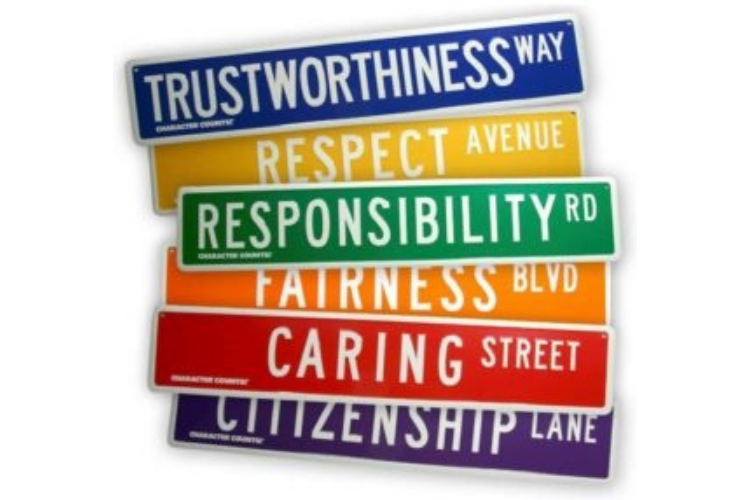
TeachWithMovies.com contains an ETHICS CURRICULUM derived from Character Counts.

Only $11.99 per year. Subscribe Today!


COMPREHENSION TEST FOR WARM SPRINGS

This test assumes that students have been presented with the information contained in the Helpful Background Section of the Learning Guide.
The Learning Guide provides an answer key and a link to a version of the test on a word processing file suitable to be printed and distributed to the class.
  • Can you think of any other world leader who was selected when that person suffered from a major disability?


  • Franklin Delano Roosevelt led the U.S. to meet two great threats to its existence. What were they?


  • Name two of Franklin Roosevelt's accomplishments before he was paralyzed by polio.


  • Who was Theodore Roosevelt and why was he important to Franklin Roosevelt?


  • How did Roosevelt's paralysis and his experiences at Warm Springs help strengthen his character?

  • Why can it be said that polio epidemics are a product of modern sanitation?
  • More questions are on the comprehension test set out in the Learning Guide.

    FDR beside the pool
    at Warm Springs
     

    LEARN MORE ABOUT TWM!

      FREE SAMPLES OF:

          FOUR TYPES OF
                 LEARNING GUIDES &
                    LESSON PLANS
                       MOST SUBJECTS K-12


    LEARNING GUIDES to feature films
            and documentaries


    LESSON PLANS for snippets
            and short subjects


    LESSON PLANS TO SET UP THE SUB
             using movies, snippets, and
             short subjects


    TALKING & PLAYING FOR GROWTH
            with movies for children 3 - 8


                Finding Nemo


    Discussion Questions:

    The Learning Guide contains references to questions on the Comprehension Test that can also serve as discussion questions. A few additional discussion questions are included in the Learning Guide. Suggested answers are provided to some of the discussion questions.


    Select questions that are appropriate for your students.


    Social-Emotional Learning Discussion Questions:

    COURAGE

  • How did FDR display courage in the face of his paralysis?


  • What was FDR's most courageous moment shown in the film?


  •  


    Only $11.99 per year for unlimited personal or classroom use of more than 300 Learning Guides and lesson plans. Subscribe Now!


    Moral-Ethical Emphasis Discussion Questions (Character Counts)

    Discussion Questions Relating to Ethical Issues will facilitate the use of this film to teach ethical principles and critical viewing. Additional questions are set out below.

    RESPONSIBILITY

    (Do what you are supposed to do; Persevere: keep on trying!; Always do your best; Use self-control; Be self-disciplined; Think before you act -- consider the consequences; Be accountable for your choices)


  • FDR's actions in relation to his paralysis met his ethical obligations under the Pillar of Responsibility. What did he do to meet this Pillar in his reaction to the paralysis? To whom was he being responsible? Suggested Response: FDR's refusal to let the paralysis stop him from living the life he wanted to live and his hard work at trying to walk again showed that he met this Pillar. The person that he was being responsible to, ultimately, was himself, but also his family and ultimately the nation.
  •  


    Teachwithmovies.com is a Character Counts "Six Pillars Partner" and uses The Six Pillars of Character to organize ethical principles.

    Character Counts and the Six Pillars of Character are marks of the CHARACTER COUNTS! Coalition, a project of the Josephson Institute of Ethics.


    The Learning Guide contains suggested answers to some of the discussion questions.


    Bridges to Reading: Each of the books mentioned in the Bibliography Section are excellent biographies of FDR. The most relevant to the issues described in the film is "FDR's Splendid Deception". For good high school level readers it will be an excellent companion to the film.


    Links To The Internet
    Additional Links to the Internet are contained in the Learning Guide.
     
    Projects And Activities Students can be asked to do the following:
    • Write a paper answering any one or a group of the Discussion Question set out above.
    • Give a class presentation, singly or in groups, responding to any of the Discussion Question set out above
     

    PHOTOGRAPHS, DIAGRAMS AND OTHER VISUALS:   Links to photographs are contained in the Learning Guide.
    Bibliography

    In addition to web sites which may be linked in the Guide and selected film reviews listed on the Movie Review Query Engine, the following resources were consulted in the preparation of the Learning Guide:
    • FDR's Splendid Deception by Hugh Gregory Gallagher, 1985, Dodd, Mead & Company, New York;
    • FDR, a Biography by Ted Morgan, 1985, Simon and Schuster, New York;
    • Sunrise at Campobello, A Play in Three Acts, by Dore Schary, Dramatists Play Service, Inc., 1957, New York;
    • A First-Class Temperament -- The Emergence of Franklin Roosevelt, by Geofrey C. Ward, 1989, Harper & Row, New York;
    • Eleanor and Franklin by Joseph P. Lash, 1971, W.W. Norton & Company, Inc., New York.
    • No Ordinary Time by Doris Kearns Goodwin, 1994, Simon & Schuster, New York.


    Adapted for use as a sample on May 27, 2009.


    Spread the GOOD NEWS about

    TEACHWITHMOVIES.COM!


    The bibliography for most Learning Guides is not this extensive.


    Copyright © 2009 by TeachWithMovies.com, Inc. All rights reserved. Note that unless otherwise indicated any quotations attributed to a source, photographs, illustrations, maps, diagrams or paintings were copied from public domain sources or are included based upon the "fair use" doctrine. No claim to copyright is made as to those items. DVD or VHS covers are shown by permission of Amazon.com and may be subject to copyrights shown thereon. TeachWithMovies.org®, TeachWithMovies.com®, Talking and Playing with Movies™, and the pencil and filmstrip logo are trademarks of TeachWithMovies.com, Inc.

    TeachWithMovies.com, Inc. grants to its subscribers a limited license to print Learning Guides and Indexes for classroom or personal use. See our Subscription Agreement.